|
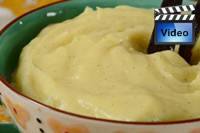
Pastry Cream:
In
a medium-sized heatproof bowl, mix the sugar and egg yolks. In
another bowl, sift
or whisk the flour and cornstarch together and then add to the
egg mixture, mixing until you get a smooth paste.
Meanwhile in a
small saucepan, bring
the milk just to a boil over medium heat. Pour the milk slowly into the egg mixture,
whisking constantly to prevent curdling. (Strain if necessary.) Then place the egg mixture into
a medium saucepan and cook over medium heat until boiling, whisking constantly.
When it boils, continue to whisk constantly for another minute or so until it
becomes thick. Remove from heat and
whisk in the vanilla extract. Pour into a clean bowl and immediately cover the
surface with plastic wrap to prevent a crust from forming. Let the cream cool
in the refrigerator for a few hours.
Sponge Cake: Preheat
oven to 350 degrees F (177 degrees C) and place rack in center of oven. Butter and line the bottoms of
two-8 inch (23 cm) round cake pans with parchment paper.
While the eggs are still
cold separate three of the eggs, placing the yolks in one bowl and
the whites in another bowl. To the yolks, add the
two remaining eggs. Cover the bowls with plastic wrap and allow the eggs to
come to room temperature (about 30 minutes).
Meanwhile,
in a bowl whisk together the flours, baking powder, and salt. Place the milk and
butter in a small saucepan, over low heat, and warm until the butter melts.
Remove from heat, cover, and keep warm.
In your electric mixer,
fitted with the paddle attachment, (or with a hand mixer) beat the whole eggs
and yolks and 1/2 cup (100 grams) of sugar
on high speed until they are thick and fluffy (3-5 minutes) (when you slowly raise the beaters the batter will fall back into the
bowl in a slow ribbon). Beat in the vanilla extract.
In a
clean bowl, with the whisk attachment, (or with a hand mixer) beat the
egg whites at low speed until foamy. Increase the speed to
medium-high and gradually add the remaining sugar, beating until soft, moist
peaks form. Gently fold a little of the whites into the batter to lighten it,
and then add the rest of the whites folding just until incorporated.
Sift half of the flour mixture over the top of the batter and
gently fold through with a rubber spatula or whisk. Sift the remaining flour
over the batter and fold in.
Make
a well in the center of the batter and pour the melted butter/milk mixture into
the bowl. Gently but thoroughly fold the butter mixture into the batter.
Divide the batter
evenly between the two pans and bake for
about 18 - 20 minutes or
until light brown and springy to the touch. (A toothpick inserted in the middle will come
out clean.) Remove from oven and place on a wire rack to cool. Immediately
run a spatula around the inside of the pans and then invert the
cakes onto a wire rack. Remove parchment paper and re-invert. Cool completely.
Chocolate Glaze: Place the chopped chocolate in a small heatproof
bowl. Bring the cream and butter just to a boil in a saucepan over medium heat.
Immediately pour the boiling cream over the chocolate and gently stir until
chocolate has melted. Set aside until it has
thickened to pouring consistency.
Assemble: Place one cake layer on your serving plate, bottom side facing
up. Spoon the pastry cream onto the cake, spreading to make an even layer.
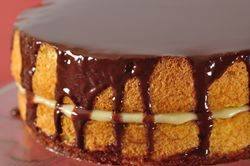
Place the second cake layer (top side up) onto the filling. Pour the
glaze onto the center of the cake and, using an offset spatula, spread the glaze to the edges of the cake, allowing the glaze to drip down the
sides. Let the cake sit until the glaze sets, about one hour. This cake
is best eaten the same day it is made. Cover and refrigerate any leftovers.
Serves 8-10
View comments on this recipe on YouTube
Sources:
Editors of Cook's
Illustrated. Baking Illustrated. America's Test Kitchen. Brookline, 2004.
Friberg,
Bo. The Professional Pastry Chef (Second Edition). New York: Van Nostrand
Reinhold, 1990
Hay, Donna.
Modern Classics Book 2. New York: HarperCollins Publishers Inc.,
2003.
Mariani,
John F. The Dictionary of American Food & Drink, New Haven and New York:
Ticknor & Fields, 1983.
|