The Italians use the
term biscotti to refer to any type of cookie. In North America,
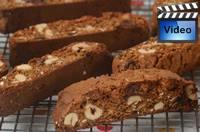
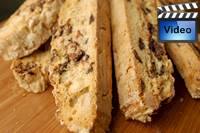
the word "biscotti" is used to describe a long, dry, hard, twice-baked cookie with a
curved top and flat bottom designed for dunking into wine or coffee.
The name biscotti is derived from 'bis' meaning twice in Italian and 'cotto'
meaning baked or cooked.
Biscotti is said to have
originated during Columbus's time and credited to an Italian baker who
originally served them with Tuscan wines. They became so popular
that every province developed their own flavored version. Because
of their long storage ability they were an ideal food for sailors,
soldiers, and fisherman.
Most European countries
have adopted their own version of biscotti: English - rusks, French -
biscotte and croquets de carcassonne, Germans - zwieback, Greeks -
biskota and paxemadia, Jewish - mandelbrot, and Russians - sukhariki.
Traditionally biscotti
were almond flavored as almonds were readily available in Italy and
nearby countries.
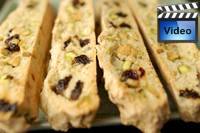
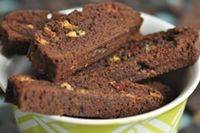
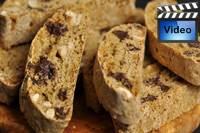
Now your imagination is the only limiting factor to
what can be added to these popular cookies; dried fruits, chocolate,
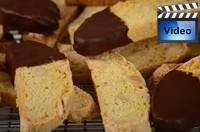
different varieties of nuts, seeds, spices, etc. They are frequently found iced
with melted chocolate or other frostings, and topped with nuts and even
colored sprinkles.