his
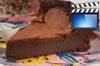
Chocolate Torte is a European-style cake that has become very popular in North
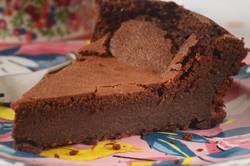
America. It has a rich chocolate flavor with an almost pudding-like interior
that has a wonderfully rustic look with its broken and cracked crusty surface
and sunken top. It can be served simply with softly whipped cream or, for a more
formal presentation, cover it with a coating of Ganache.
Chocolate tortes contain very few ingredients; unsalted
butter, chocolate, eggs, and sugar. There is a large proportion of eggs that provide the leavening. This cake does
rise during baking but, as the cake contains no flour, sinks after baking. You will notice the center of the cake sinks more than the outside rim and that
is how it should be. The outside surface of the cake will be broken,
cracked, and crusty. If pieces do fall off, just press them back
into place. Eating this cake the day it is made gives you an intense
chocolate flavor with a smooth and soft texture. It will be quite fragile
when sliced. My personal preference is to make this torte the day before
serving. Once it has been refrigerated overnight it becomes dense and fudgy with
a mellow chocolate flavor. Either way is delicious. For everyday I
like to serve this cake plain, maybe with a dollop of whipped cream. Other
times I like to cover it with a layer of Ganache with
raspberry or
strawberry purée
on the side.
Note: Americans apply the word "Torte" to any type of
European-style cake that contains little or no flour, although sometimes
containing ground nuts or breadcrumbs. In Europe, "Torte" or "Torta" is
the name used for any single or multi-layered
decorated cake containing rich ingredients. Also on the site is a
Chocolate Almond Torte
recipe that uses ground almonds, instead of flour, that adds a subtle
nutty flavor and chewy texture.
Ganache is a French term referring
to a smooth mixture of hot cream that is poured over chopped chocolate. A
little butter is sometimes added to ensure the ganache stays shiny when
refrigerated. Brandy or other flavorings can also be added.
Preheat oven to 350 degrees F (177
degrees C) and place the rack in the middle of the oven. Lightly coat a 9 x 3
inch (23 x 8 cm) springform pan with melted butter or spray with a nonstick
cooking spray. Line pan with parchment
paper, then lightly coat the paper with more melted butter (or spray with a
nonstick cooking spray). (Tip: Use a
pastry brush to brush on the melted butter.)
Separate the eggs while
still cold, placing the egg whites in one bowl and the egg yolks in another bowl. Cover both
the egg
whites and yolks with plastic wrap and bring to room temperature before using
(about 30 minutes).
Meanwhile, melt the
butter and chocolate in the top half of a double boiler over simmering water.
(Can use a stainless steel bowl over a saucepan with simmering water.)
Place egg yolks and
1/2 cup (100 grams) sugar in the bowl of your electric mixer, with the paddle
attachment. Beat on medium high speed until thick and lemon-colored,
about five minutes. (The eggs should have tripled in volume, look thick and
soft, and when you lift the beater the mixture falls back into the bowl in a
slow ribbon.) Add the vanilla extract and melted chocolate mixture, beating until combined.
In a clean bowl, with
the whisk attachment, beat the
egg whites until foamy. Add the cream of tartar and continue beating until
soft peaks form. Gradually add the remaining 1/2 cup (100 grams) sugar and
beat until stiff peaks form. Using a large rubber spatula or whisk,
fold in a
small amount of whites to the egg yolk mixture to lighten the batter. Add the
remaining egg whites, folding just until incorporated. Do not overmix or the
batter will deflate.
Pour the mixture into
the prepared pan, smoothing the top. Bake the cake for about 50 minutes to l hour or until
a toothpick inserted in the center comes out with a few moist crumbs. (During baking the surface
of the cake will form a crust which will collapse when the cake is removed
from the oven.) Remove from oven and place on a wire rack to cool. The top of the cake will have become hard
with a cracked surface and lots of crumbs.
Prepare Ganache:
For ease of handling invert cake onto
a cake circle (available at cake decorating stores) or wire rack, so the bottom
is now top, and refrigerate for one hour. Place the chocolate in a stainless
steel bowl. Heat the cream and butter in a small saucepan over medium heat.
Bring to a boil. Pour the boiling cream over the chocolate and allow to stand
for 5 minutes so the chocolate can melt. Stir with a whisk until smooth. If desired, add the liqueur.
Assemble:
Brush any loose crumbs
from the cake and place cake on a wire rack. Put the wire rack on a baking
sheet. In this way if the chocolate ganache drips it will end up on the baking
sheet, which makes clean up easier. Using a cake spatula, cover the sides and
top of the cake with about 2 tablespoons ganache. This is called a crumb coat
and seals in any cake crumbs so that your cake will have a smooth finish.
Refrigerate cake for 5 minutes to set the crumb coat. If you have any air
bubbles or crumbs in your ganache, pour glaze through a strainer. Pour the
remaining ganache into the center of the cake. Working quickly, spread with a
spatula, using big strokes to push the ganache over the sides of the cake, to
create an even coating. If there are any bare spots on sides of
cake, cover with leftover ganache. Refrigerate cake. I find this cake is
better served the next day as it allows the flavors to blend.
To serve, cut the cake
with a sharp knife, wiping off the knife after slicing each piece. If you have
problems cutting the slices, warm the blade of the knife under hot running water
before cutting each slice.
Note: Truffles
can also be made with any leftover Ganache.
Truffles are just small balls of chocolate that can be rolled into
cocoa powder, powdered sugar or toasted chopped nuts. You can use your
hands to form the truffles, or else use a melon baller or small spoon.
Make sure the chocolate ganache is very firm before forming into balls.
All content on this site is
either original or has been significantly modified and changed from its
credited original source. Use of materials on Joyofbaking.com is
entirely at the risk of the user and Joyofbaking.com or Stephanie Jaworski
will not be responsible for any damages directly or indirectly resulting
from the use.
This
website and the contents thereof are not endorsed or sponsored by the owner
of the "Joy of Cooking" series of books or its publisher Simon & Schuster,
Inc.
Content in any form may
not be copied or used without written permission of Stephanie Jaworski,
Joyofbaking.com. Students and non profit educators may use content without
permission with proper credit.