|


| |
Tested
Scone Recipes & Videos
|
|
|
 |
 |
 |
|
Cream
Scones |
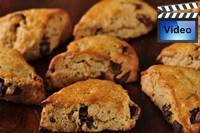
Chocolate Chip Scones |
Coffeehouse Scones |
|
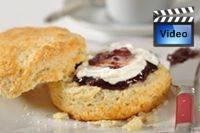
Cream Scones have a
lovely crisp crust with a rich buttery flavor and light and fluffy
texture. They are delicious cut in half and served with Devonshire
Cream and either jam or lemon curd. more |
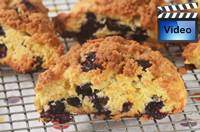
Scone dough is very
versatile and adding chocolate chunks (chips) adds a delicious
chocolate flavor that is sure to please the chocolate lover.
more |
This scone recipe makes
a scone that is similar to what you find in all the coffeehouses
these days. Using buttermilk, instead of heavy cream, and omitting
the egg makes a lighter, more bread-like scone.
more |
 |
 |
 |
|
Chocolate Scones |
Blueberry Streusel Scones |
Scones topped with
Preserves |
|
These scones are a nice
treat for the chocolate lover. Their chocolate color and flavor
comes from adding Dutch-processed cocoa powder to the scone dough
with white and dark chocolate chunks filling the dough with even
more chocolate. more |
Blueberry Streusel
Scones are bursting with sweet and juicy blueberries and have a
delicious streusel topping which gives them a delightful crunch.
more |
For this recipe the
Coffeehouse scones are topped with your favorite jam or preserve
before baking which adds a delicious fruity flavor to this
bread-like scones. more |
 |
 |
 |
|
Irish Soda Scones |
Lemon Curd |
Cinnamon Roll Scones |
|
As its name implies,
soda bread gets its rise, not from yeast, but from baking soda
(bicarbonate of soda). It can be made very quickly as it contains
only four ingredients; baking soda along with flour, salt, and
buttermilk. more |
Lemon curd is a thick,
soft and creamy, spreadable cream that has a wonderful tart yet
sweet flavor. Traditionally it was used as a spread for scones but
today we also use it to fill our tarts, pies, cakes, and as part of
a trifle. more |
This is what I call a
non-yeast version of a Cinnamon Roll that tastes great, has a
bread-like texture and takes little time to make.
more |
| |
|
|
|
More Recipes Below |
|
|
There are
two ways to pronounce scone; "Skon" and "Skoan". Scones are believed to have originated in Scotland and
are closely related to the griddle baked flatbread, known as bannock.
They were first made with oats, shaped into a large round, scored into
four to six triangles, and cooked on a griddle either over an open fire
or on top of the stove.
The origin
of the name 'scone' is just as unclear as where it came from. Some say the name comes from where the Kings of
Scotland were crowned, the Stone (Scone) of Destiny. Others
believe the name is derived from the Dutch word "schoonbrood"
("schoon" meaning clean and "brood" meaning bread), or from the German word "schonbrot"
meaning 'fine or beautiful bread'. Still others say it comes
from the Gaelic 'sgonn' a shapeless mass or large mouthful.
This
small cake is a quick bread, similar to an American biscuit, made of
wheat flour (white or wholemeal), sugar, baking powder/baking soda,
butter, milk (whole, half and half, light cream, heavy cream,
buttermilk, yogurt, etc.), and sometimes eggs. This produces a
soft and sticky dough that has the ratio one part liquid to three
parts wheat flour. It needs to be baked in a moderate to
hot oven so the dough sets quickly thereby producing a light scone
with a light to golden brown floury top and bottom with white sides. The texture of the interior of the scone should be light and soft,
and white in color.
..................
Continued below
|
|
 |
 |
 |
|
Welsh Cakes |
Devonshire (Clotted) Cream |
Biscuits |
|
Welsh Scones are very
similar to a scone, only instead of baking them in the oven they are
cooked on a griddle or in a frying pan. The outside of these
delicious cakes are golden brown, yet inside they are wonderfully
soft..
more |
Devonshire Cream is a
clotted cream produced commercially in Devon Cornwall and Somerset
England. It is a thick, rich, yellowish cream with a scalded or cooked
flavor that is made by heating unpasteurized milk until a thick layer of
cream forms on its surface. more |
A perfect biscuit, in my
mind, should have a golden brown crusty top and bottom and when you
split it in half it should be soft and flaky and moist enough to absorb
a pat of butter, which is absolutely necessary.
more |
|
 |
 |
 |
|
Cornmeal Scones |
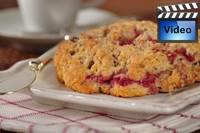
Cranberry Scone |
Gingerbread Scones |
|
Cornmeal Scones have the
subtle nutty flavor of cornmeal and the sweetness of currants.
more |
There are lots of scone
recipes milling about, but this rich flavored cream scone is what I like
to serve with Devonshire Cream and either jam or lemon curd.
more |
Scone dough takes to
gingerbread very well and you end up with a flavorful breakfast bread.
Oats are added for a hearty taste and lemon zest and dried cranberries
can also be added. more |
|
 |
 |
 |
|
Pecan and Chocolate Scones |
Pumpkin Scones |
Raspberry & Chocolate Scones |
|
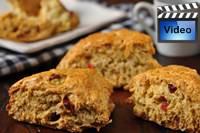
This recipe is a
delicious combination of maple syrup, milk chocolate chunks and toasted
pecans. If you are a chocolate fan, you may want to drizzle the tops
with some melted chocolate. more |
In
this recipe, pumpkin replaces some of the liquid and you end up with a
dough that is slightly firmer and less sticky than other scone doughs.
more |
Raspberry and Chocolate
Scones are a delicious combination of fresh raspberries with dark
chocolate. more |
|
 |
 |
 |
|
Scones filled with Jam |
Lemon Ginger Scones |
Strawberry Shortcake |
|
The traditional way to
eat cream scones is to split them in half and then spread each half with
jam and clotted cream. To make them more convenient, I decided to fill
the scones with the jam before baking.
more |
Using buttermilk,
instead of heavy cream, makes a lighter, more bread-like scone which is
the perfect backdrop for the crystallized ginger and lemon zest.
more |
Strawberry Shortcake is
composed of a scone or biscuit that is cut in half and filled with
whipped cream and lightly sweetened strawberries.
more |
|
 |
 |
 |
|
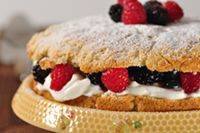
Berry Shortcake |
Apple Scone Cake |
Cranberry Oat Scones |
|
Berry
Shortcake is composed of a large scone that is cut in half horizontally
and filled with whipped cream and lightly sweetened berries.
more |
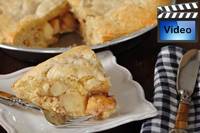
This Apple Scone Cake has
two layers of dough with cinnamon and sugar laced chunks of apples in
between. more |
This recipe honors the
original oat scone recipes by adding, to the wheat flour, some old
fashioned rolled oats. more |
|
|
Continued from above.
The correct
mixing of the ingredients is crucial in producing an excellent
scone. Although you can use an electric mixer I prefer to mix
the dough by hand using either a pastry blender, two knives or
just your fingertips. Mixing by hand helps to prevent over
mixing of the dough. To begin, the dry ingredients (flour,
sugar, baking powder/baking soda, and salt) are whisked together in
a large bowl. Next the butter is cut into the flour until it
looks like coarse crumbs. It is important that the butter be
cold so when it is worked into the flour mixture it becomes
small, flour- coated crumbs, not a smooth dough. This method
is similar to how a
pie dough is made and gives the scone a wonderful delicate and flaky
texture. This is the point where any dried or fresh fruit,
nuts, zests, and other flavorings you may be using are added.
The wet ingredients are then mixed together separately and then
added to the flour mixture. Only mix the dough until it comes
together. I cannot stress enough that this dough should not be
overworked and that a light hand is needed. The test will be
in the results. If you end up with a hard and doughy scone,
you will know to mix the dough less the next time you make them.
When the
dough is mixed, gather it up in your hands and place on a lightly
floured surface. Knead the dough a few times to make it a
cohesive mass and then roll or pat it into a 7 inch (18 cm) round
that is about 1 inch (2.54 cm) high. You can cut the scone
dough into 6 to 8 triangles or else use a lightly floured
cookie cutter and cut into rounds. Place on a parchment paper
lined baking sheet and brush with an egg wash, if desired.
Using an egg wash
gives the scone a nice appearance and helps with browning. Scones that are placed close together, that is almost touching, will
have soft sides and their crusts will be less crispy. If you
place them further apart the scones will be crusty all over. The scones are done when they are nicely browned and a toothpick
inserted in the center of the scone comes out clean. Cool on a
wire rack. If you want crusty scones, cool them uncovered.
If a softer crust is desired, then wrap the hot scones in a clean
dish towel. Scones are best served warm.
Plain scones
are traditionally served warm, split open, and topped with butter,
jam or preserves,
clotted
cream, and/or lemon curd.
However, many of the scone recipes today that are flavored with
fruits, spices, nuts, zests are best eaten plain.
Note: Can use
light cream, half-and-half or milk instead of heavy whipping cream for a
lighter scone.
Note: If you find the bottoms of the scones are browning too
much during baking, use two sheets pans (place one pan inside another).
Note: Using buttermilk, instead of heavy cream, makes a
lighter, more bread-like scone. They are baked at a higher
than normal oven temperature which gives them a darker, crispier
crust. Buttermilk has a nice thick creamy texture with a rich
tangy buttery taste that makes baked goods tender. It is now
commercially made by adding a bacteria to whole, skim, or low fat
milk. However, in the past it was the liquid left over after
churning butter. You can make your own by adding 1 tablespoon
of white distilled vinegar, cider vinegar, or lemon juice to 1 cup
of milk. Let stand 5 to 10 minutes before using.

|
| |
|