uddings
are one of the simple pleasures of life and while we often think of them as
nursery food or food for the sick, their rich taste and creamy texture seem to
nurture us all. Unfortunately there is a trend for making puddings from a box
but I encourage you to try making your own as it is really easy. Homemade
puddings also taste much better than boxed and have the added advantage of not
containing preservatives or other ingredients that we cannot even pronounce.
Puddings start with simple ingredients, just things we normally have in our
pantries; milk, eggs, dark brown sugar, cornstarch (corn flour), butter, and
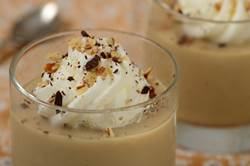
vanilla extract. What gives this pudding its wonderful butterscotch flavor is
the dark brown sugar, and a generous amount of pure vanilla extract also imparts
lots of flavor. This recipe comes from Richard Sax's cookbook "Classic Home
Desserts" which is full not only of homey desserts but of great advice and
history. But what I really like about this book is its list of Historical
Sources as it is a great way to get started on collecting some classics.
When you make
this butterscotch pudding what you are really doing is making a 'cooked'
custard. There is only one real difference between a pudding and a custard and that
is cornstarch (corn flour). Cornstarch is added to a cooked pudding so it
becomes thick enough to eat with a
spoon. The important thing is that they have to be cooked carefully as we
do not want lumps or even worse,
scorching. So keep the heat fairly low and use a heavy bottomed saucepan,
making sure that you stir constantly with a large heatproof rubber
spatula. When stirring it is important to reach the bottom, sides and corners
of the saucepan to prevent the pudding from sticking and scorching. Once the pudding has become thick, like mayonnaise, remove
it from the heat and add the butter and vanilla extract. Then strain the pudding
to get rid of any lumps that may have formed. If you like
your pudding warm, then by all means eat it right away. But if
you like your pudding cold, simply press plastic wrap
onto the surface of the puddings and refrigerate until firm (a couple of hours). For those who like a skin (film) on the top of their pudding, let the pudding cool
uncovered and then cover with plastic wrap and refrigerate. Of course, puddings
always seem to taste better when there is a large dollop of cream on the
top.
In a large stainless steel
(heatproof) bowl whisk together the sugar, cornstarch, salt, and egg yolks. Whisk in 1/2 cup (120 ml) of the milk until you have a thick paste. Set aside while you heat the milk. Have
ready a fine medium-sized strainer and bowl as you will need
to strain the pudding after it is cooked.
First, rinse a medium-sized
heavy saucepan
with cold water and then shake out the excess water. Doing this step prevents
the milk from scorching. Then pour the remaining 2 1/2 cups (600 ml) of milk
into the saucepan and bring just to a boil. Gradually pour the
hot milk into the egg mixture, whisking constantly, until the mixture is smooth. Transfer the pudding mixture to a clean large, heavy bottomed saucepan and place over medium-low
heat. Cook, stirring constantly, until the mixture thickens to the
consistency of mayonnaise (about 2 minutes). Remove from heat and whisk in
the butter and vanilla extract. Pour
through the strainer to remove any lumps that may have formed during cooking.
Pour into 4 bowls
or wine glasses. The pudding can be served warm or if chilling, press plastic
wrap onto the surface of the warm puddings to prevent a skin from forming. If
you like the skin, simply leave the pudding uncovered until cooled, then cover
with plastic wrap and refrigerate. The puddings can be made a day or two ahead
of serving. Garnish each pudding with a large dollop of softly whipped cream.
All content on this site is
either original or has been significantly modified and changed from its
credited original source. Use of materials on Joyofbaking.com is
entirely at the risk of the user and Joyofbaking.com or Stephanie Jaworski
will not be responsible for any damages directly or indirectly resulting
from the use.
This
website and the contents thereof are not endorsed or sponsored by the owner
of the "Joy of Cooking" series of books or its publisher Simon & Schuster,
Inc.
Content in any form may
not be copied or used without written permission of Stephanie Jaworski,
Joyofbaking.com. Students and non profit educators may use content without
permission with proper credit.