|

The cranberry,
along with the Concord grape and blueberry, are native to America. This small, hard, smooth-skinned, shiny red, round to oval-shaped
wild berry also goes by the names craneberry, bounceberry, bearberry, cowberry, or lingonberry. Cranberries are harvested in the fall from Labor Day (early
September) through late October. They can be found in
the produce section of grocery stores from October through December. Look for berries that are firm, plump, shiny, and evenly colored
(light to dark red). Avoid soft, discolored (white or green
ones are under ripe) or shriveled cranberries. Remove
stems and wash just before using.
The tartness of the cranberry make
it one of the few berries that is never eaten raw. Sugar is needed to
temper its tangy, or should I say sour, flavor. One excellent way to use cranberries
is to candy them. Actually,
candying cranberries is very similar to the way you candy the rind of an
orange or lemon; where you first simmer the berries in a sugar syrup and
then leave them to macerate for a few days. This process of soaking them
in a sugar syrup produces a cranberry which is tender and sweet yet, at
the same time, retains a hint of tartness. Now, you can use these candied
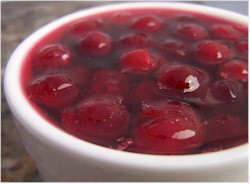
cranberries, along with their syrup, as a dessert topping over cakes and
ice cream. Or, if the syrup is drained from the berries, you can add them
to fillings of cakes (Cranberry
Christmas Cake) and pies. And make sure you do not throw away any
leftover syrup from the drained berries, for you can add liqueur to it,
and it can be brushed on sponge cakes or added to frostings for both
flavor and color. |