|
Clarified
butter is also called drawn butter. Simply defined, clarified butter is
unsalted butter that has the milk solids and water removed so all that remains
is pure liquid golden-yellow butterfat. The advantages of this type of
butter is its long keeping quality (several months refrigerated) and its high
smoke point (can be used in frying without burning). The disadvantage is
that it doesn't have that same wonderful rich flavor of regular unsalted butter
(since the milk solids have been removed) but it does have a more buttery taste
than other oils.
To make clarified butter
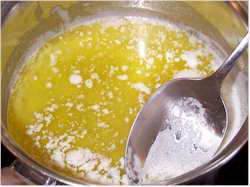
gently melt unsalted butter over low heat until the butter breaks down and three
layers form. The top layer is a white foam or froth (the whey proteins) and should be skimmed off with a spoon. The milk
solids will drop to the bottom of the saucepan and form a milky layer of sediment.
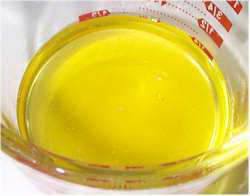
What is left in the middle is a pure golden-yellow liquid called clarified
butter. When you have skimmed all the white foam from the surface of the
clarified butter, and it has stopped bubbling, remove the saucepan from the heat.
Let the butter
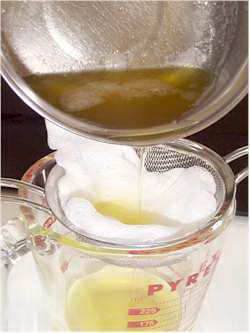
sit a few minutes to allow the milk solids to further settle to the bottom, and then strain
the mixture through a fine sieve or a cheesecloth-lined strainer.
The liquid collected is the golden-yellow clarified butter (butterfat) that can
be covered and stored several months in the refrigerator. Chilled
clarified butter does become grainy.
The intensity of flavor
of the clarified butter depends on how long you cook the melted butter. If you
continue to cook the butter once it has melted and separated, the milk solids
at the bottom of the saucepan will start to brown. Once the milk solids turn a
golden brown color the clarified butter will take on a rich fragrant nutty
flavor that is called "noisette butter" or "beurre noisette" which is a French
name for "brown butter" or "hazelnut butter". (So named because the the butter
turns the color of noisettes (hazelnuts)). However, be very careful not to
overheat the butter or it will become bitter tasting.
Clarified butter is used in
baking genoise, madeleines, and other baked goods where
creaming the butter is
not necessary and you want that distinctive fragrant nutty flavor. For
cooking it is used in making hollandaise sauce and is excellent for sauteeing as
it has a high smoke point.
|