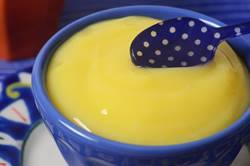
Lemon Curd is a thick, soft, and
velvety cream that has a deliciously tart yet sweet citrus flavor.
While traditionally it was used as a spread for scones, it also makes a delicious filling or topping for tarts, pies, and cakes.
What I like
about Lemon Curd
is that it doesn't use exotic ingredients; just eggs, sugar, lemon juice, lemon zest, and
butter. It is similar to a lemon filling or custard in that it is cooked on the stove,
only it doesn't contain a thickener like cornstarch. I like to
cook the curd in a stainless steel bowl placed over a saucepan of simmering
water (a double boiler) as this helps prevent the eggs from curdling. That is,
where you get little specks of cooked egg in the lemon curd. However, if this does happen you can
just strain the lemon curd to remove any lumps that may have formed. Once made,
butter is added for richness and flavor, and lemon zest is added to enhance the
lemon flavor. You will find that the lemon curd continues to thicken as it
cools. Cover the lemon curd immediately with plastic wrap to prevent a skin from
forming and it can be stored in the refrigerator for about a week.
For the best
flavor, lemon curd should be made with freshly squeezed lemon juice. When choosing lemons
use organic if possible. Look for ones that are fragrant with
brightly colored yellow skins. The best ones are firm, plump, and heavy for
their size. Don't buy lemons that have blemishes, soft spots, or are hard and
wrinkled. Lemons consist of a yellow outer rind (skin) that can be of varying
thickness and graininess, and can have either a bumpy or a smooth texture. This
outer skin is where most of the lemon's wonderful tangy flavor is
located. Before removing the outer rind (zest) make sure you wash the lemon
thoroughly (soap and water is best). When removing the zest do not remove the
white membrane (pith) that is underneath as it is very bitter tasting. Once you
have removed the outer rind, inside the lemon are small vessels called 'pulp
vesicles' which contain the pleasantly acidic lemon juice and seeds. Squeezing
the lemon by hand or with a lemon squeezer or reamer releases this clear tart
juice.
Lemon Curd: In a stainless steel bowl, whisk together the eggs, sugar, and lemon juice. Place
over a saucepan of simmering water and cook, stirring constantly to prevent it from
curdling, until the mixture becomes thick (like sour cream) and coats the back
of a wooden spoon
(165 degrees F) (74 degrees C). This will take approximately 10 minutes. Remove from
heat and immediately pour through a fine strainer to remove any lumps. Cut the butter
into small pieces and whisk into the mixture until the butter has melted. Stir
in the
lemon zest. Cover immediately so a skin doesn't form, and let cool. The lemon
curd will continue to thicken as it cools.
Lemon Curd can be stored in
the refrigerator for up to a week.
Makes about 1 1/2 cups (360 ml).
Note: If you want a lighter lemon curd whip 1/2 cup (120 ml) of
heavy whipping cream and fold into the lemon curd.
Use of materials on
all pages on the domains Joyofbaking.com,
the Joyofbaking.com Facebook
Page, the
Joyofbaking1 YouTube
Channel and any emails sent from @joyofbaking.com
are
entirely at the risk of the user and their owner, iFood Media LLC
will not be responsible for any damages directly or indirectly resulting
from the use.
References
cited may include a link to purchase the referenced book or item on Amazon.com.
Joyofbaking.com receives a commission on any purchases resulting from these
links.
This
website and the contents are not endorsed or sponsored by the owner of the
"Joy of Cooking" series of books or its publisher Simon & Schuster, Inc.
and is not related to the "Joy the Baker" books and website.
Video icons by Asher.
Content in any form may
not be copied or used without written permission of Stephanie Jaworski,
Joyofbaking.com. Students and non profit educators may use content without
permission with proper credit.