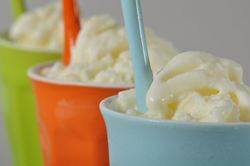
Lemon Sherbet is a light and refreshing frozen treat. It has a tangy sweet lemon flavor
with a texture that is both creamy yet slightly grainy. The best way to describe it, is to say it's a cross between an ice cream
and a sorbet. You can serve Lemon Sherbet as they do in fancy restaurants as a palate cleanser between courses.
But more often than not, I serve it for dessert either on its own, or with some
fresh fruit, or with a scoop of Blackberry
Sorbet or Raspberry Sherbet.
This Lemon Sherbet is so easy to make. All you do is stir together equal
amounts of lemon juice, heavy whipping cream, and milk. Then just sweeten
the mixture with
sugar. Because the tartness of the lemons can vary depending on the lemons
you use, taste the mixture as you may have to add more sugar. While you
can make the sherbet in an ice cream machine, it isn't absolutely
necessary. I usually just "still freeze" the mixture. Which means you pour
it into a metal dish (will freeze faster in metal) and then place in
the freezer for about four hours or until frozen solid. As it freezes stir
every 30-60 minutes to break up any ice crystals and to stir air into the
mixture. Otherwise, if you don't stir the sherbet, its texture will be
more like a popsicle.
Sherbet has a long history and in ancient times was a
non alcoholic sweetened fruit drink sold in the Middle East by street
vendors during the summer months. If we fast foward to today, the words 'sherbet' and 'sorbet'
can be different things depending on where you live. So to avoid
confusion, I use
'Sorbets' for frozen ices made using fresh fruit
(juices/purees), sugar, and water. 'Sherbets', on the other hand, while
containing fruit juice or puree and sugar, also contain milk and/or cream,
and can sometimes even contain eggs.
Lemon Sherbet:
In a measuring cup, stir together the lemon juice, lemon zest, cream, milk, and
sugar. Taste and add more sugar if needed. There are two ways you can make
this Sherbet.
Method One: If you do not have
an ice cream machine you can 'still freeze' the sherbet. Which means pour the mixture into
a metal pan (so it freezes faster), cover with plastic wrap, and place in the freezer for about four hours
or until firm (it will have a consistency somewhere between an ice cream and a
sorbet). Stir the mixture ever 30 - 45 minutes to break up any large ice
crystals that may have formed. For longer storage, transfer the sherbet to a container and
store in the freezer.
Method Two: If using an ice
cream machine, first cover and chill the mixture in the refrigerator for several hours
until cold.
Then place in your ice cream machine and process according to
the manufacturer's instructions. Once made, transfer to a container and
store in the freezer.
Makes about 4
servings. Preparation time 20 minutes.
Use of materials on
all pages on the domains Joyofbaking.com,
the Joyofbaking.com Facebook
Page, the
Joyofbaking1 YouTube
Channel and any emails sent from @joyofbaking.com
are
entirely at the risk of the user and their owner, iFood Media LLC
will not be responsible for any damages directly or indirectly resulting
from the use.
References
cited may include a link to purchase the referenced book or item on Amazon.com.
Joyofbaking.com receives a commission on any purchases resulting from these
links.
This
website and the contents are not endorsed or sponsored by the owner of the
"Joy of Cooking" series of books or its publisher Simon & Schuster, Inc.
and is not related to the "Joy the Baker" books and website.
Video icons by Asher.
Content in any form may
not be copied or used without written permission of Stephanie Jaworski,
Joyofbaking.com. Students and non profit educators may use content without
permission with proper credit.