|
Cinnamon Rolls: In
the bowl of your electric stand mixer, fitted with the paddle attachment (can use an
electric hand mixer), combine 2 1/4 cups
(295 grams) flour with the dried milk powder (if using) and the yeast.
In a small saucepan, stirring
constantly, heat the milk, butter, sugar, and salt just till warm (about 120 degrees
F) (49 degrees C) and the butter is almost melted.
With the mixer on low speed, gradually pour the milk
mixture into the flour mixture, and beat until combined. On
low speed, add
eggs, one at a time, beating well after each addition. Scrape down the
sides and bottom of the bowl as needed. Then beat this mixture on high speed for 3 minutes. Replace the
paddle attachment with the dough hook (or knead by hand), and knead in
the remaining 2 1/4 cups (295 grams) flour until you have a soft dough that
is smooth and elastic, but not sticky (5 minutes). Add a little more flour
if necessary. Shape
the dough into a ball and place in a greased bowl, turning once. Cover with
plastic wrap and let rise in a warm
place (73 - 75 degrees C) (23 - 24 degrees C) until soft and puffy and almost double
in size (approximately 1 1/2 hours).
Then gently punch the dough to release the
air and let rest for 10 minutes.
Meanwhile, make
the filling. In a bowl stir together
the brown sugar, flour, and cinnamon. Cut in the cold butter with a pastry
blender, or two knives, until the mixture is crumbly.
On a lightly
floured surface, roll
the dough into a 12 inch (30 cm) square. Lightly brush the surface of the dough
with cream or water. Sprinkle the filling evenly
over the rolled out dough and top with raisins and/or nuts (if desired). Gently press the
sugar mixture into the dough. Lightly brush one
end of the dough with a little half-and-half or light cream (to seal the edges
of the rolls). Roll the dough to form a log, starting at the end opposite the
edge you brushed with cream. (Do not roll the dough too tightly or the centers
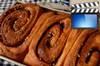
of the rolls will pop up during baking.) Slice the log into eight equal-sized pieces. Arrange
rolls in a greased 13
x 9 x 2 inch (33 x 23 x 5 cm) baking pan. Cover rolls loosely with
lightly greased plastic wrap, leaving room for rolls to rise, at room temperature
(73 - 75 degrees C) (23 - 24 degrees C), until
almost doubled (about one hour). (Or, at this point you can refrigerate the Cinnamon
Rolls overnight.) Next morning, remove the rolls from the refrigerator, and let
stand at room temperature for about 30 minutes before baking.)
Meanwhile preheat your oven to 375 degrees F (190 degrees C) oven.
When the Cinnamon
Buns are proofed, lightly brush rolls
with half-and-half or light cream. Bake for about 20 to 25
minutes
or till browned, and a toothpick inserted into one of the buns,
comes out clean. Also, if you lightly tap on the top of the
buns they should sound hollow. The internal temperature of the Cinnamon
Rolls should be 188 degrees F (87 C).
Remove rolls from oven. Brush again with half-and-half or light cream. Remove
the Cinnamon Rolls from the pan by inverting onto a wire rack. Let cool.
Re-invert so the tops of the Cinnamon Rolls are facing up.
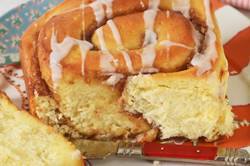
Glaze: In a
small bowl, combine the powdered sugar and enough cream to make a pourable
glaze. With a spoon, drizzle the glaze on the tops of the Cinnamon Rolls.
Serve warm
or at room temperature.
Makes 8 rolls.
View comments on this recipe on YouTube |