|
Sweet Pastry Crust:
In a separate bowl, whisk the flour with the salt. Place the butter in the
bowl of your electric mixer, or with a hand mixer, and beat until softened. Add sugar and beat
until light and fluffy. Gradually add the beaten egg, beating just until
incorporated. Add the flour mixture all at once and mix just until it forms a ball. Flatten the pastry into a disk,
cover with plastic wrap, and refrigerate for 15-30 minutes or just until firm
(can place in freezer for about 10-15 minutes.)
Lightly butter and flour, or spray with a non-stick vegetable/flour cooking
spray, an 8 - 9 inch (20 - 23 cm) tart pan with a removable bottom. Evenly pat
the chilled pastry onto the bottom and up the sides of the pan. Cover with
plastic wrap and place in the freezer for about 15 minutes.
Meanwhile, preheat oven to 400 degrees F
(205 degrees C) and place rack in center of oven. Lightly prick bottom of pastry
crust with the tines of a fork (this will prevent the dough from puffing up as
it bakes). Place tart pan on a larger baking pan and bake crust for 5 minutes.
Reduce oven temperature to 350 degrees F (180 degrees C) and continue to bake
the crust for about 15 minutes
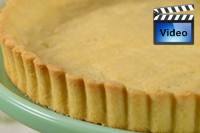
or until dry and lightly golden brown. Remove from oven and place
on a wire rack to cool completely before filling. Can be covered and stored for
a few days.
Pastry Cream: In
a medium-sized heatproof bowl, mix the sugar and egg yolks
together. (Don't let the mixture sit too long or you will
get pieces of egg forming.) Sift the flour and cornstarch
(corn flour) together and then add to the
egg mixture, mixing until you get a smooth paste.
Meanwhile, in a saucepan
bring
the milk and vanilla bean just to boiling (just until milk starts to foam up.) Remove from heat and
add slowly to egg mixture, whisking constantly to prevent curdling. (If you get
a few pieces of egg (curdling) in the mixture, pour through a strainer.) Remove
vanilla bean, scrape out seeds, and add the seeds to the egg mixture. (The
vanilla bean can be washed and dried and placed in your sugar bowl to give the
sugar a vanilla flavor.) Then pour the egg mixture into
a medium saucepan and cook over medium heat until boiling, whisking constantly. When it boils, whisk mixture constantly for another 30 - 60 seconds until it
becomes thick. Remove from heat and
immediately whisk in the liqueur (if using). (Stir in vanilla extract is using
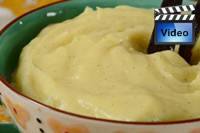
instead of a vanilla bean.) Pour into a clean bowl and
immediately cover the surface with plastic wrap to prevent a crust from forming. Cool
to room temperature. If not using right away refrigerate until needed, up to 3 days. Beat
or whisk before using to get rid of any lumps that may have formed.
Apricot Glaze: Heat the apricot jam or
preserves and water in a small saucepan over medium heat until liquid
(melted). (Can also heat in the microwave.) Remove from heat and strain the jam through a fine strainer to remove
any fruit lumps.
To Assemble Tart:
To remove the tart from the fluted sides of the pan, place your hand under the
pan, touching only the removable bottom not the sides. Gently push the tart
straight up, away from the sides. The fluted tart ring will fall away and slide
down your arm. If you want to remove the bottom of the pan, run a knife or thin
metal spatula between the crust and metal bottom, then slide the tart onto your
platter.
Spread a thin layer of
apricot glaze over the bottom and sides of the baked tart shell to prevent the
crust from getting soggy. Let the glaze dry (about 20 minutes). Then spread the
pastry cream onto the bottom of the tart shell. Place fruit randomly on top of
cream or in concentric overlapping circles, starting at the outside edge. After arranging the fruit,
rewarm the glaze, if using, and gently brush a light coat on the fruit. If not
serving immediately, refrigerate but bring to room temperature before serving. This fruit tart is best eaten
the same day as it is assembled. Cover and refrigerate any leftovers.
Serves about 6-8 people.
View comments on this recipe on YouTube
References:
Le Cordon Bleu,
London. |
|
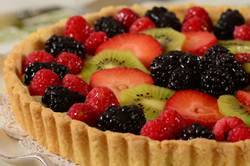
Sweet Pastry Crust:
1 1/2 cups (195 grams) all
purpose flour
1/8 teaspoon
salt
1/2 cup (113 grams) unsalted
butter, at room temperature
1/4 cup (50
grams) granulated white
sugar
1 large egg,
lightly beaten
Pastry Cream:
1 1/4 cups (300 ml) milk
(whole or 2%)
1/2
vanilla bean, split
lengthwise or 1 teaspoon pure vanilla extract or vanilla bean paste
3 large
egg yolks
1/4 cup (50 grams)
granulated white sugar
2 tablespoons (20 grams)
all-purpose flour
2
tablespoons (20 grams) cornstarch (corn flour)
1/2 tablespoon
liqueur (Grand Marnier, Brandy, Kirsch) (optional)
Apricot Glaze:
(optional)
1/2 cup
(120 grams) apricot jam or preserves
1 tablespoon water
Topping:
3 cups
(720 ml) fruit (raspberries,
blackberries, strawberries, blueberries, kiwifruit, bananas, plums,
pineapple, melon, etc.)
|




%20or%20a%20medley%20of%20berries%2C%20sliced%20kiwi%2C%20plums%2C%20bananas%2C%20pineapple%2C%20and%2For%20melon%20no%20one%20can%20resist%20its%20beauty.%20From%20Joyofbaking.com%20With%20Demo%20Video)