ound
cakes are the ones we bake for every day. They are the cakes that sit on the
counter just waiting for us to slice off a piece to enjoy with our coffee.
This particular pound cake recipe is one I found over and over again in
English cookbooks. I found it in Arabella Boxer's wonderful book 'Arabella
Boxer's Book of English Food' which is about British foods served before WWII.
I found it again in Jane Pettigrew's 'The National Trust Book of
Tea-Time Recipes' which pays tribute to present day tea rooms in the United
Kingdom. And this particular recipe comes from another great English food
writer, Jane Grigson (Jane Grigson's Fruit Book). What is so appealing about
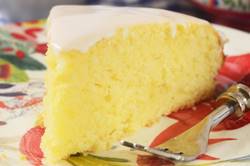
this cake is its buttery yet intense lemon flavor that comes from adding
both lemon zest and juice to the cake batter and then lemon juice is also
used in the icing that frosts the cake. After tasting this cake it is no
surprise that this cake has long been a favorite at Afternoon Teas. There is
a difference in opinion on whether to pour the icing over the still warm cake
so the icing melts completely into the cake, or to let the cake cool first and then frost the top of the cake so as
the icing dries it hardens into a crusty glaze. Either way is
delicious, so I will leave this decision up to
you.
When choosing lemons look for ones that are fragrant with brightly colored oily yellow
skins. If you can buy organic. The best lemons have firm, plump, and heavy for their size. Don't
buy lemons that have blemishes, soft spots, or are hard and wrinkled. Lemons
consist of a yellow outer rind (skin) that can be of varying thickness
and graininess, and can have either a bumpy or a smooth texture. This
outer skin is where most of the lemon's wonderful tangy flavor is located. Before removing
the outer rind (zest) make sure you wash the lemon thoroughly (soap and
water is best). When removing the zest do not remove the white membrane
(pith) that is underneath as it is very bitter tasting. Once you have
removed the outer rind, inside the lemon are small vessels called 'pulp vesicles'
which
contain the pleasantly acidic lemon juice and seeds. Squeezing the
lemon by hand or with a lemon squeezer or reamer releases this clear tart
juice. Always use fresh lemons to make lemon curd as the bottled
lemon juice is a poor substitute and won't give you that wonderful sharp
and refreshing citrus taste.
Preheat
oven to 350 degrees F (180 degrees C) and place rack in the center of the oven.
Butter, or spray with a nonstick spray, a 9 inch (23 cm) springform pan and then line the bottom of the pan with parchment paper. Set
aside.
In the bowl of
your electric mixer, with the paddle attachment, cream the butter and sugar
until light and fluffy and pale in color (about 3 minutes). Add the eggs,
one at a time, mixing well after each addition. Beat in the vanilla
extract and lemon zest.
Sift
together the flour, baking powder and salt and then add to the batter along with
the lemon juice. Mix only until incorporated.
Pour the
batter into the prepared pan, smoothing the top with an offset spatula.
Bake about 45 minutes, or until a toothpick inserted in the center comes out clean.
Place on a wire rack to cool, then gently remove the sides of the pan.
For the
icing, combine the sifted confectioners' sugar with the 2 tablespoons lemon
juice. (You want the icing to be thicker than a glaze but still thin
enough that it will just run over the sides of the cake. If not the
right consistency add more lemon juice or powdered sugar, accordingly.)
Frost the top of the cake, allowing the icing to drip down the sides. Let
the icing set before covering.
This cake
will keep for several days in an airtight container.
Makes one -
9 inch (23 cm) cake.
Recipe:
1 cup (226 grams) unsalted
butter, room temperature
All content on this site is
either original or has been significantly modified and changed from its
credited original source. Use of materials on Joyofbaking.com is
entirely at the risk of the user and Joyofbaking.com or Stephanie Jaworski
will not be responsible for any damages directly or indirectly resulting
from the use.
This
website and the contents thereof are not endorsed or sponsored by the owner
of the "Joy of Cooking" series of books or its publisher Simon & Schuster,
Inc.
Content in any form may
not be copied or used without written permission of Stephanie Jaworski,
Joyofbaking.com. Students and non profit educators may use content without
permission with proper credit.