Page loading ... Please wait.
 
Baking & Dessert Recipes & Photos
 
Web Joyofbaking.com


About Us

Substitutions

Ingredients

Glossary

Conversions


Home

Recipe Index

New Recipes

Breakfast & Brunch

Bars & Squares

Cakes

Cookies

Comfort Foods

Pies & Tarts

Biscotti

Quick Breads

Muffins

Scones

Shortbreads

English Tea Party

Trifles

Apple Recipes

Lemon Recipes

Strawberry Recipes

Christmas Baking

Christmas Candy

Christmas Cookies

Valentine's Day Desserts

Thanksgiving Baking

Easter Baking

Ice Creams & Ices

Baking History

Bibliography

Meringue Cookies Recipe

Printer Friendly Page

Meringue Cookies Recipe

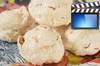
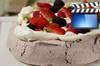
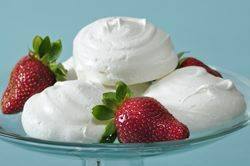
These Meringue Cookies are so airy, sweet and crisp that they seem to almost melt in your mouth. The outsides of the meringues are nice and crisp, yet the insides remain wonderfully soft and puffy, almost like mini-Pavlovas. While I often eat these just as they are, they also make a very nice plated dessert. Place one meringue in the center of your plate and top with whipped cream, or ice cream (sherbet), and fresh fruit. 

Meringue Cookies are made with just two main ingredients: stiffly beaten egg whites and superfine (caster) sugar. To ensure the egg whites reach maximum volume, have your mixing bowl and beaters clean and free of grease. It is easier to separate your eggs while they are cold. Once separated, cover the egg whites and let them come to room temperature before using (about 30 minutes). Cover and refrigerate the egg yolks for another use. Superfine sugar makes the best meringues as it dissolves easier in the whites. To make your own, take 3/4 cup (150 grams) granulated white sugar and process in your food processor until very fine. 

There are a few things to keep in mind when making meringue cookies. The standard ratio when making hard meringues is 1/4 cup (50 grams) of granulated white sugar for every egg white. This amount of sugar is needed to give the meringue its crispness. Adding the sugar gradually to the egg whites ensures that the sugar completely dissolves and does not produce a gritty meringue. Cream of tartar is used in the whipping of egg whites to stabilize them and allows them to reach maximum volume. Also, it is a good idea to use parchment paper or aluminum foil to line your baking sheets, not wax paper, as the meringue will sometimes stick to wax paper.

Baking the meringues in a slow oven allows for gradual evaporation of the moisture from the meringues.  If the oven temperature is too high, the outside of the meringue will dry and set too quickly. You will also notice that the outside of the meringue separates from the inside. Another indicator that your oven is too high is when the meringue starts to brown which causes the sugar to caramelize. If this happens, lower the temperature about 25 degrees F. If you decide to make meringues on a rainy or humid day, you will probably have to bake the meringues longer (could be up to 30 minutes more) than on a dry day. Lastly, to prevent cracking of the meringues, do not open the oven door during the first half of the baking time.


Preheat oven to 200 degrees F (105 degrees C) and place the rack in the center of your oven. Line a baking sheet with parchment paper. You can form the cookies with a pastry bag fitted with a 1/2 inch (1.25 cm) plain tip, or I often just use two spoons to make the cookies. 

In the bowl of your electric mixer, with the whisk attachment, beat the egg whites on low-medium speed until foamy. Add the cream of tartar and continue to beat the whites until they hold soft peaks. Add the sugar, a little at a time, and continue to beat until the meringue holds very stiff peaks. Beat in the vanilla extract.  

Note: The meringue is done when it holds stiff peaks and when you rub a little between your thumb and index finger it does not feel gritty. If it feels gritty the sugar has not fully dissolved so keep beating until it feels smooth between your fingers.

Before placing the cookies on the cookie sheet, place a little of the meringue on the underside of each corner of the parchment paper. This will prevent the paper from sliding.  Transfer the meringue to a pastry bag fitted with a 1/2 inch (1.25 cm) tip. Pipe 2 1/2 inch (6 cm) rounds of meringue in rows on the prepared baking sheet.  Alternatively, spoon mounds of meringue, using two spoons, onto the prepared sheets. Sprinkle with a few shaved almonds, if desired.

Bake the meringues for approximately 1 1/2 to 1 3/4 hours, rotating the baking sheet from front to back (about half way through) to ensure even baking. The meringues are done when they are pale in color and fairly crisp. Turn off the oven, open the door a crack, and leave the meringues in the oven to finish drying overnight.

Makes about 10 - 2 1/2 inch (6 cm) meringues

Meringue Cookies:

3 large egg whites (3 ounces or 90 grams)

1/4 teaspoon cream of tartar

3/4 cup (150 grams) superfine or caster sugar (if you don't have superfine sugar simply take granulated white sugar and process it for about 30 seconds in a food processor)

1/4 teaspoon pure vanilla extract

Garnish:

1/4 cup shaved Almonds

s


Save This Page to del.icio.us


A baking resource on the Internet since 1997

Contact Us   Privacy Policy

All content on this site is either original or has been significantly modified and changed from its credited original source.  Use of materials on Joyofbaking.com is entirely at the risk of the user and Joyofbaking.com or Stephanie Jaworski will not be responsible for any damages directly or indirectly resulting from the use.

This website and the contents thereof are not endorsed or sponsored by the owner of the "Joy of Cooking" series of books or its publisher Simon & Schuster, Inc.

Content in any form may not be copied or used without written permission of Stephanie Jaworski, Joyofbaking.com.  Students and non profit educators may use content without permission with proper credit. 

Copyright  1997 to 2008 Stephanie Jaworski